Connectivity is only the beginning
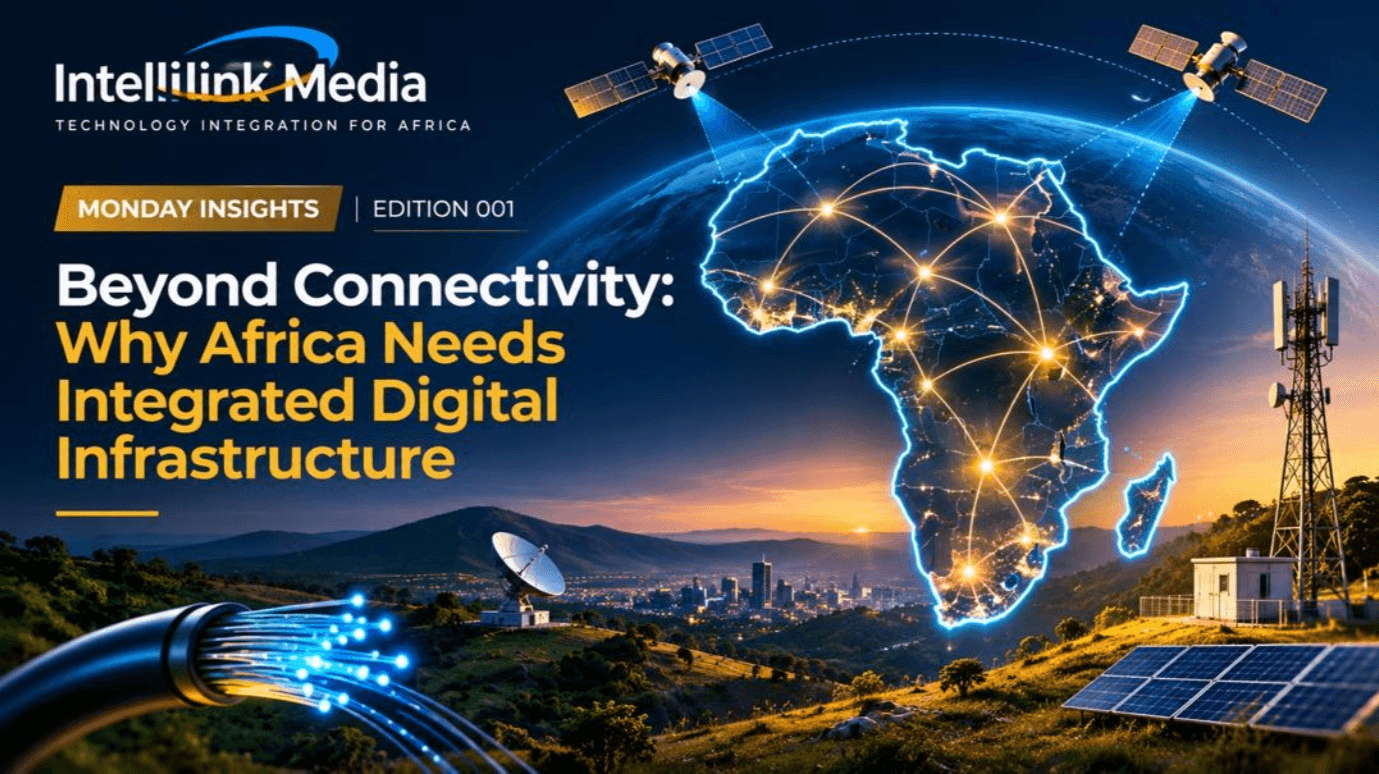
Africa's digital transformation is entering an important new phase. Fibre networks continue to expand, mobile broadband technologies are evolving, and low Earth orbit (LEO) satellite systems are introducing new possibilities for reaching locations where terrestrial infrastructure is limited.
These developments are encouraging. Yet they raise a fundamental question:
Are we simply connecting more locations, or are we building digital infrastructure that African institutions and businesses can depend on?
The distinction matters.
According to the International Telecommunication Union's Facts and Figures 2025, approximately 36% of people in the ITU Africa region used the Internet in 2025, compared with approximately 74% globally.
Expanding access remains essential. But meaningful digital transformation also depends on service quality, affordability, reliability and the ability to integrate different technologies into coherent systems.
From individual networks to integrated infrastructure
Historically, telecommunications infrastructure has often been considered in terms of separate technologies: fibre, microwave, mobile broadband or satellite.
Each has strengths and limitations.
Fibre can provide substantial capacity and predictable performance, but physical damage and difficult terrain can affect deployment and continuity. Microwave can support strategic links where suitable paths exist, while satellite can extend reach and provide alternatives where terrestrial connectivity is unavailable or disrupted.
The opportunity lies not in declaring one technology superior, but in understanding how they can complement one another.
Consider an enterprise operating across several African locations.
Its headquarters may rely on fibre, regional facilities may use microwave, and remote operations may depend on satellite. Unless these connections are integrated through appropriate routing, security, monitoring and operational arrangements, the organisation may still experience fragmented performance and avoidable service interruptions.
Multiple connections do not automatically create a resilient network.
Resilience must be engineered.
The emerging role of LEO satellite networks
LEO satellite systems are changing the options available to network architects, service providers and enterprises.
Their potential extends beyond connecting previously underserved locations. When appropriately integrated, they can contribute to hybrid network architectures, business continuity strategies and infrastructure diversification.
However, deploying an additional satellite terminal does not, by itself, solve questions concerning network management, service accountability, cybersecurity, lawful regulatory obligations or operational visibility.
These issues require deliberate architectural and governance decisions.
For African markets, the objective should be to capture the advantages of emerging satellite technologies while strengthening the capabilities and responsibilities of the broader national and regional telecommunications ecosystem.
Four priorities for the next phase
Africa's next generation of digital infrastructure should be guided by four complementary priorities.
1. Technology integration. Design networks around operational requirements rather than individual access technologies. Fibre, wireless and satellite should be evaluated as components of a larger architecture.
2. Resilience and continuity. Build appropriate redundancy, routing policies, monitoring and recovery procedures into critical services. Diversity of access technologies is useful only when dependencies and failure scenarios are understood.
3. Governance and accountability. Establish clear responsibilities among infrastructure providers, network operators, integrators, enterprises and regulators. Technical innovation and regulatory compliance should be treated as compatible design objectives.
4. Local technical capability. Invest in the engineering, operational and institutional expertise needed to deploy, maintain, secure and evolve increasingly complex networks.
These priorities are interdependent. Technology without operational capability creates dependency; connectivity without resilience creates exposure; and innovation without governance creates uncertainty.
Building infrastructure that serves Africa's future
The next chapter of Africa's digital transformation should not be measured solely by the number of connections established.
It should also be measured by whether hospitals can maintain essential communications, whether educational institutions can reliably access digital resources, whether enterprises can sustain operations during network failures, and whether African technical institutions can exercise meaningful responsibility over the infrastructure serving their communities.
This calls for collaboration among telecommunications operators, technology providers, regulators, infrastructure specialists and enterprise stakeholders.
At Intellilink Media, our perspective is grounded in a simple principle:
Technology Integration for Africa.
The opportunity ahead is not merely to connect Africa, but to help build integrated, resilient and responsibly governed digital infrastructure that supports the continent's long-term development.
References
- International Telecommunication Union (2025). Measuring Digital Development: Facts and Figures 2025.
- Broadband Commission for Sustainable Development (2025). The State of Broadband in Africa.